

Understanding Gabapentin’s Dosage Range: Why Multiple Strengths Exist
Gabapentin’s therapeutic dose range — spanning from 100mg per dose to 1,200mg per dose depending on indication and individual patient response — is one of the broadest in CNS pharmacotherapy. This breadth is not arbitrary: it reflects the combination of nonlinear absorption pharmacokinetics that create a ceiling on per-dose bioavailability, the significant inter-patient variability in clinical response and tolerability, and the diversity of indications requiring different total daily dose targets.
Buy Gabapentin in the strength that aligns with your prescribed therapeutic phase — whether you are initiating therapy at conservative low doses or maintaining established high-dose chronic pain management — and ensure the most practical adherence support. The right strength for each patient is not fixed: it evolves through the titration process from initiation doses through therapeutic maintenance targets, and having access to the full range of strengths at a licensed pharmacy is a clinical convenience that directly supports adherence throughout this process.
The available strengths serve distinct clinical roles:
- 100mg capsules: Ultra-conservative initiation in elderly patients, patients with high CNS sensitivity, or severe renal impairment
- 300mg capsules: The standard titration unit — the most frequently dispensed gabapentin strength in clinical practice
- 400mg capsules: Intermediate strength for patients moving from 300mg toward mid-range therapeutic doses
- 600mg tablets: Mid-to-high range therapeutic dosing — reduces pill burden for patients at 1,800mg/day and above
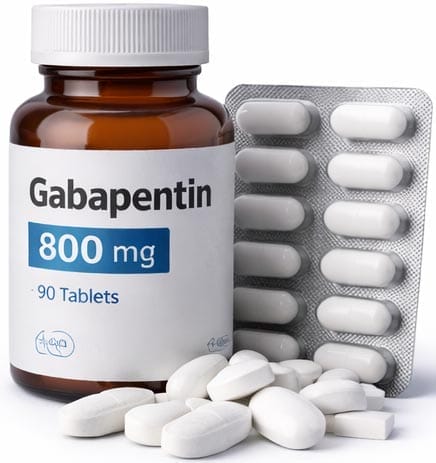
- 800mg tablets: The highest available unit dose — essential for patients requiring 2,400–3,600mg/day to manage high-dose therapy with practical tablet counts
Gabapentin 300mg: The Clinical Workhorse
The 300mg capsule is the most widely prescribed gabapentin strength — both because it serves as the fundamental building block of standard titration protocols and because the majority of patients achieve therapeutic targets in the 900–1,800mg/day range where three to six 300mg capsules daily are used.
Standard titration with 300mg as the unit dose:
Day 1–7: One 300mg capsule at bedtime
Day 8–14: One 300mg capsule morning + one at bedtime
Day 15–21: One 300mg capsule three times daily (total: 900mg/day)
Subsequent weeks: Add one 300mg capsule per day every 3–5 days
The 300mg capsule’s versatility enables fine-grained titration — allowing increases of 300mg at a time rather than forcing larger dose jumps. For patients with high sensitivity to CNS effects during initiation, the 300mg capsule can be opened and the powder mixed with food or liquid for even more conservative sub-300mg dosing at initiation, if clinically needed.
Affordability: Generic gabapentin 300mg capsules are available at licensed pharmacies for $12–28 per 90-count (30-day supply at three times daily) through prescription discount programs — making this the most cost-effective standard dosing option for patients at 900mg/day.
Gabapentin 600mg and 800mg: High-Dose Therapy Management
For patients whose clinical conditions require gabapentin doses of 1,800mg/day and above — refractory postherpetic neuralgia, severe diabetic neuropathy, spinal cord injury pain, complex regional pain syndrome — the 600mg and 800mg tablet strengths provide an essential practical benefit: dramatically reduced daily tablet counts that support adherence to high-dose regimens.
The adherence mathematics of high-dose gabapentin:
- 2,400mg/day using 300mg capsules: 8 capsules daily — significant pill burden
- 2,400mg/day using 600mg tablets: 4 tablets daily — 50% reduction
- 2,400mg/day using 800mg tablets: 3 tablets daily — 63% reduction
- 3,600mg/day using 300mg capsules: 12 capsules daily — extremely burdensome
- 3,600mg/day using 600mg tablets: 6 tablets daily — significant improvement
- 3,600mg/day using a combination of 800mg tablets: 4.5 doses — practical further reduction
For patients already managing multiple chronic condition medications, the pill burden reduction of higher-strength gabapentin formulations is a genuine quality-of-life improvement that directly supports long-term adherence to high-dose neuropathic pain regimens.
Pharmaceutical quality standards: FDA-approved generic gabapentin 600mg and 800mg tablets must satisfy the same USP specifications as all gabapentin formulations — identity testing, 90–110% of labeled potency, dissolution testing confirming appropriate drug release, and stability testing. Buy Gabapentin 800mg at any VIPPS-certified licensed pharmacy and you receive tablets manufactured to these specifications by FDA-inspected facilities — consistent dose delivery for high-dose therapy that clinical outcomes depend upon.
Absorption Pharmacokinetics: Why Gabapentin Requires Three Daily Doses
Gabapentin’s intestinal absorption occurs via a saturable, carrier-mediated transport system — the large neutral amino acid transporter (LAT) — rather than through passive diffusion. This saturable transport mechanism produces the nonlinear pharmacokinetics that are clinically important for understanding why gabapentin dosing differs from most analgesics.
Saturation and bioavailability decline: At low individual doses (150mg), approximately 80% of the dose is absorbed. At the 300mg dose, approximately 60% is absorbed. At 600mg per individual dose, approximately 40% is absorbed. At 1,600mg single dose, absorption falls to approximately 35%. The practical implication is that taking the entire daily gabapentin dose once daily is dramatically less bioavailable — and clinically less effective — than the same total dose divided into three administrations.
Three-times-daily dosing rationale: Dividing the daily dose into three equal administrations every 8 hours ensures that each individual dose stays within the more efficiently absorbed range, maximizing overall daily gabapentin bioavailability. For a 1,800mg/day total dose:
- Given as 1,800mg once daily: approximately 35% absorbed → approximately 630mg effective
- Given as 600mg three times daily: approximately 40% per dose → approximately 720mg effective
Practical four-times-daily dosing at very high doses: For patients requiring 3,600mg/day, four daily administrations (900mg × 4) provides better bioavailability than three (1,200mg × 3) because each dose is in the less-saturated absorption range. Some clinical protocols at very high doses use four-times-daily scheduling for this pharmacokinetic reason.
Order Gabapentin in sufficient quantity to maintain consistent three-times-daily dosing — running out of medication and taking fewer doses than prescribed reduces overall bioavailability and therapeutic efficacy, not merely the counted dose.
Renal Dosing: The Most Critical Gabapentin Safety Adjustment
Gabapentin’s exclusive renal elimination — it undergoes no hepatic metabolism, has no active metabolites, and is not bound to plasma proteins — means that renal function directly and predictably determines how rapidly gabapentin is cleared. Renal impairment produces gabapentin accumulation that is not compensated by any alternative elimination pathway.
FDA-recommended renal dose adjustments:
- CrCl ≥ 60 mL/min: Standard dosing — up to 3,600mg/day
- CrCl 30–59 mL/min: Maximum 700mg three times daily (2,100mg/day)
- CrCl 15–29 mL/min: Maximum 700mg twice daily (1,400mg/day)
- CrCl < 15 mL/min: Maximum 700mg once daily
- Hemodialysis: Supplemental post-dialysis dose required (gabapentin is dialyzable)
Consequences of unadjusted dosing in renal impairment: Gabapentin accumulation produces a toxicity syndrome of severe sedation, confusion, encephalopathy, myoclonus, ataxia, and — particularly when combined with opioids or other CNS depressants — respiratory depression. These consequences are entirely preventable with appropriate renal dose adjustment and regular monitoring.
Elderly patients and occult renal impairment: Normal serum creatinine values can mask significant GFR decline in elderly patients with reduced muscle mass — who generate less creatinine despite reduced renal clearance. GFR estimation using the CKD-EPI or Cockcroft-Gault formula (which incorporates age, weight, and sex) provides a more accurate renal function assessment for dosing purposes than creatinine alone. All elderly patients initiating gabapentin should have formal GFR estimation before the starting dose is determined.
Cheap Gabapentin Access: Maximizing Value Through Certified Pharmacy Channels
Cheap Gabapentin at generic prices through licensed pharmacy channels represents one of the best pharmacoeconomic values in pain medicine — significant clinical benefit at costs that are a small fraction of branded alternatives. Understanding how to maximize this value within the certified pharmacy framework benefits every patient on gabapentin therapy.
Prescription discount platform optimization: Free platforms — GoodRx, RxSaver, Blink Health, NeedyMeds — provide negotiated discount codes redeemable at participating licensed pharmacies. Prices vary across pharmacies for identical products; comparing platforms and nearby pharmacies through these apps typically takes under five minutes and can identify $10–20 per month savings for the same pharmaceutical-grade generic gabapentin.
Quantity optimization: For patients on stable long-term gabapentin therapy, 90-day prescription fills (where permitted by the prescribing physician and insurance plan) often carry a lower per-tablet cost than monthly fills — and reduce the number of prescription management transactions required annually.
Insurance tier placement: Generic gabapentin is at Tier 1 (lowest copay, preferred generic) in virtually all formularies. Patients who are told gabapentin requires prior authorization or is on a higher tier should verify with their pharmacist — standard generic gabapentin formulary placement essentially never requires prior authorization for routine doses.
For patients who Purchase Gabapentin Online through VIPPS-certified platforms, home delivery eliminates transportation costs that can be significant for patients who travel to pharmacies for monthly fills — adding real economic value on top of already competitive medication pricing.